
Ben Stopford
Depth Counselling & Psychotherapy
Ben Stopford
Depth Counselling & Psychotherapy
“The privilege of a lifetime is to become who you truly are.”
— Carl Jung
What Is the Self?
Of all Carl Jung's ideas, none is more important—or more easily misunderstood—than the Self.
In everyday language, we use the word self to mean our personality, identity or sense of who we are. Jung meant something far deeper.
From a Jungian perspective, the Self is the organising centre and totality of the psyche. It encompasses both the conscious mind and the vast, largely unseen world of the unconscious. If the ego is the small island of awareness that says "I", the Self is the entire landscape—the known and unknown, the visible and invisible, the life we have lived and the life that is still trying to emerge. The Self is not something we create, but something we gradually discover.
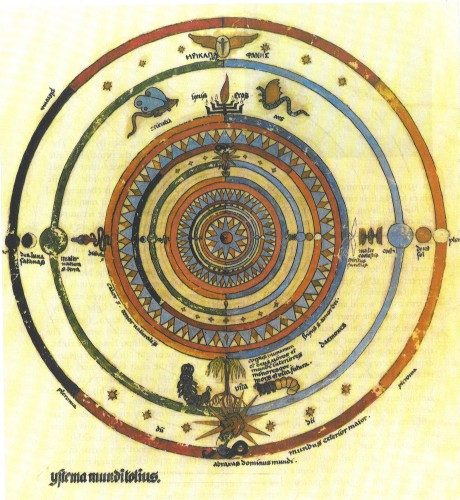
Jung believed that psychological growth is not primarily about becoming happier, more successful or more efficient. It is about becoming more whole, hence the mandala in the image above, the archtypal image of wholeness.
The Self represents this movement towards wholeness.
More Than the Ego
Modern culture often encourages us to strengthen the ego. Build confidence, develop resilience, find your identity. While these aims have value, Jung believed they represented only the first stage of psychological development. The ego is essential to this, but it is far from the whole story. He wrote:
“The ego is the subject of all personal acts of consciousness.”
Yet the ego knows only a small fraction of the psyche. Dreams, symbols, instincts, emotions, creative inspiration, religious experience, synchronicity. These all point towards something larger than conscious control. So Self is that larger reality. It continually invites the ego into a more complete relationship with life.
In Myth
The Self rarely appears directly. Instead, mythology surrounds it with symbols of completeness. The Holy Grail, The Philosopher's Stone, The World Tree, The Sacred Mountain, The Mandala, The Centre of the Labyrinth, The Kingdom. These images differ across cultures, yet they point towards the same psychological reality: an inner centre around which life gradually begins to organise itself.
Joseph Campbell recognised that the hero's journey is ultimately not about defeating monsters. It is about returning transformed.
He wrote:
“The goal of the myth is to bring you to a level of consciousness that is spiritual.”
In Jungian terms, this movement towards a fuller consciousness reflects the work of the Self.
In The Lord of the Rings Frodo's journey is not simply about destroying the Ring. It is about becoming someone capable of carrying immense burden without losing his humanity. The return to the Shire reveals a profound psychological truth. The world may look the same, but the traveller has changed. This is individuation. It is right there in the name, Frodo, from the old-English Frōda, meaning 'wise by experience'.
Similarly, in The Lion King, Simba's return is not simply a political one. It is deeply psychological, psychospiritual even. He cannot become king until he remembers who he is. Rafiki's (The Sage's) famous words—
“Remember who you are.”
—express one of the deepest themes in Jungian thought. The Self is not acquired. It is remembered.
From these stories we can gather that if the Self is the destination, individuation is the journey. Jung used this term to describe the lifelong process through which conscious and unconscious aspects of the personality gradually become integrated. This does not mean becoming perfect. It means becoming more fully ourselves. Our authentic, honest, messy, real selves.
The process often involves encountering the Shadow, Persona, Anima or Animus, dreams and symbols. Each encounter expands consciousness. Each loosens our identification with the ego, so that the Self slowly becomes the organising principle of life.
Marie-Louise von Franz described individuation as less like constructing a personality and more like uncovering a pattern that has always existed.
The Self and Dreams
Dreams frequently communicate through symbols of the Self. Jung noticed that many dreams naturally produce images of wholeness, such as circles, mandalas, gardens, cathedrals, mountains, trees, the sun or sacred animals. Such symbols often appear during periods of significant psychological transformation. Rather than predicting the future, they suggest that the psyche is reorganising itself around a deeper centre.
As a dream analyst, I often find that dreams of the Self arrive quietly. They rarely announce themselves. Instead, they leave the dreamer with a profound feeling that something essential has been encountered, even if its meaning only becomes clear over time.
Paradoxically, we approach the Self not by avoiding darkness, but by entering it. Jung insisted that genuine wholeness requires an encounter with the Shadow. The qualities we reject, emotions we fear, the parts of ourselves we have forgotten. These do not obstruct individuation. They make it possible. Jung wrote:
“One does not become enlightened by imagining figures of light, but by making the darkness conscious.”
The Self includes what the ego excludes.
Midlife and the Self
Many people first become consciously aware of the Self during midlife. The goals that organised the first half of life begin to lose their urgency. Career success may no longer satisfy whilst external achievement may feel strangely empty. Questions arise that cannot be answered through productivity alone. This can feel immensely overwhelming, as our psyche attempts to reorganise our centre of gravity.
James Hollis suggests that the second half of life invites us away from adaptation and towards authenticity. The psyche begins asking:
Whose life am I living?
What remains unlived within me?
What is my life asking of me now?
Such questions signal the Self becoming more active. Viktor Frankl believed that human beings are fundamentally oriented towards the meaning buried in these questions. Jung would likely have agreed, while adding that meaning often emerges symbolically rather than intellectually.
The Self continually seeks greater integration. When we ignore this movement, we may experience persistent dissatisfaction, repeated relationship patterns, anxiety and depression or a profound longing without clear object. Such experiences are painful, yet they may also represent invitations.
Bill Plotkin argues that many contemporary societies provide little guidance for the soul's development beyond external achievement, so Depth psychology offers another possibility. Rather than asking only how to function more effectively...it asks what kind of person life is inviting us to become.
The Self in Psychotherapy
Depth psychotherapy is, in many respects, a conversation with the Self. Symptoms are not viewed simply as problems to eliminate, dreams are not dismissed as random, recurring patterns are not regarded as accidents. Each may contain symbolic significance. Together we explore the language through which the unconscious communicates.
Dreams.
Images.
Relationships.
Life transitions.
Myths.
Emotional reactions.
Gradually, the ego begins to relate differently to the larger life of the psyche. This is not about becoming someone new. It is about becoming more completely yourself.
Further Reading
Exploring the Self Through Psychotherapy
I believed that every life carries an inner pattern—a movement towards greater wholeness that cannot be reduced to career success, relationships or external achievement. We may glimpse this movement through dreams, moments of crisis, unexpected longings or the quiet sense that there is more to our lives than we have yet lived. The Self is not a destination we reach once and for all, but a lifelong process of becoming increasingly aligned with who we truly are. It is an unfolding.
In my practice, I work from a depth psychotherapy perspective informed by Jungian psychology, dream analysis, mythology and existential philosophy. Therapy offers a space to listen carefully to the symbolic language of the psyche, exploring recurring patterns, dreams and life transitions with curiosity rather than judgement. Over time, many people find that what initially brought them to therapy—anxiety, loss, relationship difficulties or a lack of meaning—becomes part of a much larger journey: not simply towards feeling better, but towards becoming more fully themselves.
Related Pages
We need your consent to load the translations
We use a third-party service to translate the website content that may collect data about your activity. Please review the details in the privacy policy and accept the service to view the translations.