
Ben Stopford
Depth Counselling & Psychotherapy
Ben Stopford
Depth Counselling & Psychotherapy
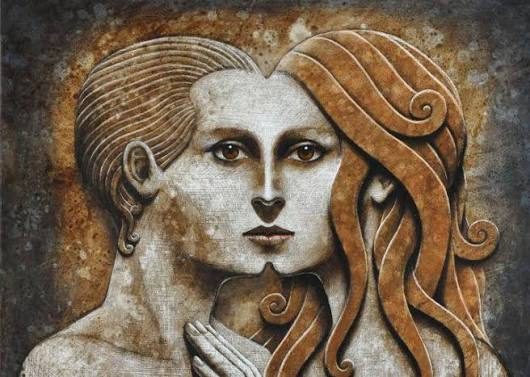
“The anima is the archetype of life itself. And, at the same time, she is the great illusionist, the seductress, who draws him into life with her Maya-and not only into life's reasonable and useful aspects, but into its frightful paradoxes and ambivalences where good and evil, success and ruin, hope and despair, counterbalance one another. Because she is his greatest danger she demands from a man his greatest, and if he has it in him she will receive it.."
— C G Jung
The Anima is one of Carl Jung's most profound—and often misunderstood—archetypal ideas.
In Jung's original formulation, the anima described the unconscious feminine dimension within a man's psyche, while the animus described the unconscious masculine dimension within a woman's. Modern Jungian clinicians often approach these concepts less as fixed ideas about gender and more as symbolic descriptions of complementary psychological capacities, recognising that all people contain multiple modes of relating, imagining and making meaning.
Rather than reducing the anima to "the feminine", it may be more helpful to understand her as the personification of the soul-life of the psyche—the part of us that feels deeply, dreams vividly, imagines symbolically and longs for genuine, deep relationship.
James Hillman wrote that the anima is not something we possess. It is the way the psyche itself becomes personal.
She is the voice that asks questions logic cannot answer. The quiet intuition that something matters. The beauty that suddenly brings tears. The dream that refuses to be forgotten. The unexpected sense that life is speaking through symbol rather than fact.
Why the Anima Matters
Modern life prizes analysis, efficiency and productivity. The anima reminds us that not everything valuable can be measured. Some truths arrive through dreams, music, poetry, grief, imagination, silence and nature. Bill Plotkin suggests that genuine adulthood involves becoming intimate with the deeper soul of the world rather than merely succeeding within society. The anima represents precisely this movement—from external achievement towards inner participation.
She asks a different question. Not "How can I control my life?" But: "What is trying to emerge through my life?"
Jung's Understanding of the Anima
Jung noticed that many of the men he worked with repeatedly dreamed of mysterious women. Sometimes they appeared as lovers. Sometimes as children. Sometimes as queens. Sometimes as old women. Sometimes as witches.
These figures often carried emotional significance far beyond ordinary dream characters. Rather than representing literal women, Jung understood them as symbolic expressions of the unconscious itself. He wrote:
"The anima is a personification of all feminine psychological tendencies in a man's psyche."
Today many Jungian analysts broaden this idea, seeing the anima as a symbolic image of relatedness, imagination, feeling and the psyche's capacity to draw the ego into dialogue with the unconscious.
The Anima in Myth
The anima appears throughout mythology. She rarely dominates the story. Instead she calls it into being.
Beatrice guides Dante through Paradise.
Ariadne gives Theseus the thread that allows him to leave the labyrinth.
Sophia represents divine wisdom.
Persephone journeys between worlds.
The Lady of the Lake presents Excalibur.
Each becomes a bridge.
Not merely between people...but between worlds.
Joseph Campbell argued that myth continually presents figures who awaken us to realities larger than ourselves. The anima is often one of these figures.
The Anima in Stories
One reason Jung's work continues to resonate is that great stories intuitively understand archetypes. In Beauty and the Beast, Belle is more than a romantic heroine. She represents the anima's capacity to perceive humanity beneath appearance. Where others see only a monster...she sees an imprisoned soul. She holds the capacity for beauty.
In The Lord of the Rings Galadriel functions as an anima figure. She offers vision, not instruction. Her mirror reveals possibility rather than prophecy. She cannot choose Frodo's path, but she can deepen his perception.
The Anima and Love
Perhaps nowhere is the anima more powerful than in romantic love. Jung believed that we often project unconscious images onto another person. Someone seems impossibly fascinating, even magical. Part of this attraction belongs to the other person. Part belongs to ourselves. The beloved becomes the water upon which unconscious longings are projected and reflected.
Marie-Louise von Franz suggested that much of early romantic intensity involves meeting aspects of our own soul reflected through another person. This does not make love unreal. It makes it psychologically profound. Over time healthy love gradually replaces projection with genuine encounter and we begin seeing the person, rather than the image.
The Anima and Dreams
Dreams are perhaps the anima's native language. She may appear as:
Sometimes she is radiant. Sometimes deeply unsettling. Both forms matter. Jung observed that the anima often leads the ego towards neglected dimensions of psychological life. She invites feeling where there has been excessive thinking. Imagination where life has become mechanical. Relationship where isolation has become habitual.
I often find that recurring feminine figures signal an invitation rather than an answer. Rather than asking, "Who is this woman?", depth psychotherapy asks, "What part of your own inner life is trying to come into relationship with you?"
The Shadow of the Anima
Like every archetype, the anima possesses a shadow.
When unconscious she can become:
Rather than helping us relate, she can make us confuse imagination with another person. Many people spend years searching for the "perfect partner" while unknowingly seeking an inner experience that no relationship alone can provide. James Hollis writes that the task of adulthood is not finding someone to complete us but becoming capable of relationship ourselves. The anima invites precisely this maturation.
The Anima and Creativity
Artists have often described creativity as though it arrives from elsewhere. Poets speak of inspiration, Awen. Musicians hear melodies before writing them. Novelists describe characters taking on lives of their own. Hillman believed imagination is not merely something humans produce, but something we participate in. The anima symbolises this living imagination. She appears whenever beauty interrupts routine. Whenever a dream refuses explanation. Whenever a painting, landscape or piece of music feels strangely familiar.
The Anima in Contemporary Life
Our culture often encourages us to become efficient. Less often does it encourage us to become inwardly alive. Many people arrive in therapy saying:
"I've achieved everything, but something is missing."
The anima frequently appears during these moments. Not as crisis, but as invitation.
She asks:
These questions are vital. Journal on them and see what arises.
John Vervaeke's work on the meaning crisis echoes this concern. Modern societies often provide immense information while leaving people disconnected from the forms of wisdom, symbolism and participatory meaning that nourish psychological life.
The Anima in Psychotherapy
Depth psychotherapy provides a space where the anima can gradually emerge. Not as fantasy or mysticism, but as a living psychological reality. Together we might explore:
Rather than analysing the psyche from a distance, depth psychotherapy invites a relationship with it. The anima often becomes one of the most important companions on that journey.
Further Reading
Related Pages
Exploring the Anima Through Psychotherapy
The anima is not something to master or explain away. She is better understood as a lifelong relationship with those dimensions of experience that resist control—dreams, imagination, love, grief, beauty and the symbolic life of the psyche. When ignored, these aspects often emerge indirectly through dissatisfaction, projection or a persistent sense that something essential is missing.
In my practice, I work from a depth psychotherapy perspective informed by Jungian psychology, dream analysis, mythology and existential philosophy. Therapy offers a place to explore these inner movements with curiosity rather than certainty. Over time, many people discover that the anima is not leading them away from ordinary life but into a richer, more wholehearted participation in it. It is often through this dialogue with the unconscious that a deeper sense of meaning and authenticity begins to emerge.
We need your consent to load the translations
We use a third-party service to translate the website content that may collect data about your activity. Please review the details in the privacy policy and accept the service to view the translations.