
Ben Stopford
Depth Counselling & Psychotherapy
Ben Stopford
Depth Counselling & Psychotherapy
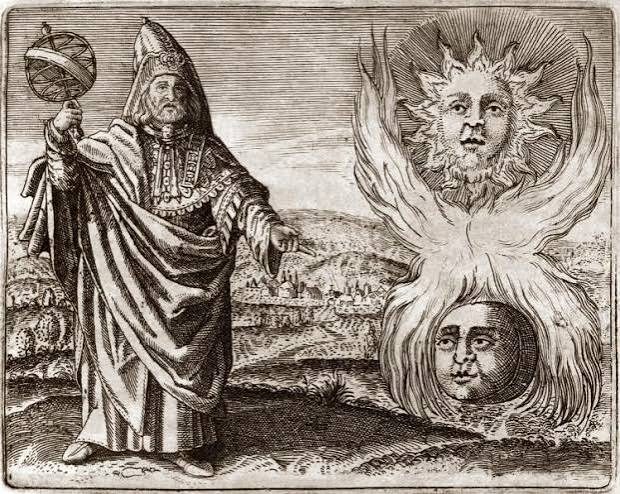
“The first half of life is devoted to forming a healthy ego, the second half is going inward and letting go of it.”
— Carl Jung
What Is the Sage Archetype?
The Sage represents humanity's enduring search for truth, wisdom and understanding. Unlike the Hero, who seeks victory, or the King, who establishes order, the Sage seeks to perceive reality more clearly. This archetype is less concerned with certainty than with seeing beneath appearances. The Sage within us asks; "What is actually true?"
In Jungian psychology, the Sage is closely related to the Wise Old Man archetype, one of the psyche's great symbolic figures. The Sage often appears during periods of uncertainty, loss or transition, when our familiar ways of understanding the world begin to break down. Rather than offering easy answers, the Sage invites us into a deeper relationship with ambiguity, reflection and meaning. This invitation toward paradox-not-conflict can be transformational in itself.
The Sage reminds us that wisdom is not the accumulation of facts or knowledge, but the capacity to live well with complexity.
Why We Need the Sage
We live in an age of extraordinary (sometimes overwhelming) information. Never before have we had access to so much knowledge. Yet many people feel increasingly uncertain about how to live.
Psychologist and philosopher John Vervaeke argues that we are living through a meaning crisis. Information has expanded rapidly, but the practices that cultivate wisdom have diminished. We 'know' more than ever, yet often struggle to understand what truly matters.
The Sage archetype speaks directly to this condition.
Rather than asking us to consume more information, it invites us to cultivate discernment—the ability to distinguish what is merely interesting from what is genuinely transformative.
As T. S. Eliot famously asked:
“Where is the wisdom we have lost in knowledge? Where is the knowledge we have lost in information?”
This is the modern predicament.
The Sage in Myth and Story
Every culture has imagined figures whose primary gift is wisdom. Merlin advises Arthur but never seeks the throne. Tiresias, though blind, sees more clearly than kings. Odin sacrifices certainty in pursuit of wisdom, hanging upon Yggdrasil to receive the runes. The Buddha leaves privilege in search of liberation. Socrates spends his life asking questions rather than providing comfortable answers.
All these figures share something profound, in that they understand that wisdom requires humility. The Sage is therefore not someone who possesses ultimate knowledge, but someone who remains teachable, open to new possibilities and incorruptible by dogma.
The Sage in the Modern Psyche
Stories often portray the Sage not as the central hero, but as the one who helps the hero see differently. Gandalf (in The Lord of the Rings) rarely solves problems for others. Instead, he enlarges their perspective, he trusts that growth cannot be given, as it must be discovered for oneself. His quiet guidance reflects one of the Sage's defining qualities: helping others become wiser rather than more dependent.
In Harry Potter we see that Albus Dumbledore understands that knowledge without love becomes dangerous. Throughout the books, he consistently privileges compassion over power. His admission— “It is our choices, Harry, that show what we truly are, far more than our abilities.” —reflects the Sage's emphasis on character over achievement.
In The Chronicles of Narnia, professor Kirke and Aslan function as Sage figures. Neither compels belief, instead, they invite trust in realities that cannot be grasped through reason alone. C. S. Lewis repeatedly suggests that genuine wisdom requires imagination as well as intellect.
The Sage and Jung
Jung described the Wise Old Man as one of the great archetypes of the collective unconscious. This figure often appears in dreams when the ego has reached the limits of its own understanding. The Wise Old Man does not replace our thinking. He expands it. Jung wrote:
“Your vision will become clear only when you can look into your own heart. Who looks outside, dreams; who looks inside, awakens.”
The Sage therefore directs attention inward—not away from reality, but towards a more complete encounter with it. Wisdom Is different from intelligence. One of the Sage's greatest lessons is that intelligence and wisdom are not the same. A person may be intellegent and successful, yet profoundly lacking in self-knowledge. Conversely, someone with little formal education may possess remarkable psychological insight. James Hollis observes:
“The purpose of psychotherapy is not to make us happy but to make us conscious.” The Sage values this consciousness over certainty. Understanding over performance. Depth over speed. This distinction has become increasingly important in a culture that often rewards quick opinions more than thoughtful reflection.
The Shadow of the Sage
As we know, every archetype carries its own shadow. The healthy Sage remains curious. The shadow Sage becomes certain. Wisdom hardens into intellectual superiority and lnowledge becomes identity. Thinking becomes a defence against feeling. We all know versions of this figure. The scientist who cannot admit uncertainty. The spiritual teacher who believes themselves beyond ordinary human struggle. Jung warned that identifying with any archetype too completely leads to inflation—the mistaken belief that we have become the source of wisdom rather than its student.
So the true Sage never stops learning.
The Sage and Midlife
The Sage often becomes particularly active during the second half of life. Early adulthood is often organised around achievement, identity and belonging, whilst midlife introduces different questions.
What have my successes cost me?
What values genuinely matter to me?
Who am I when familiar roles begin to change?
James Hollis has written extensively about this transition, suggesting that many midlife crises are not failures but invitations. The old story no longer fits, so the psyche begins asking for another, better story. The Sage helps us navigate this movement—not by returning us to certainty, but by teaching us how to inhabit deeper questions.
In Dreams
Dreams frequently introduce Sage figures during periods of transition.
They may appear as:
Sometimes they offer advice. Sometimes they ask a single question. Sometimes they simply accompany us. In work as a dream analyst, we often find these dreams emerging when someone is beginning to trust their own inner authority. Rather than telling the dreamer what to do, the Sage often changes how they perceive the situation itself. This is the trust of intuition returning, and cn mark a profound shift in the therapeutic journey. This is one reason Jung regarded dreams as essential to psychological development. They enlarge consciousness rather than merely reinforcing what we already know.
The Sage and Individuation
For Jung, the goal of psychological development was individuation—the gradual integration of conscious and unconscious aspects of the personality. The Sage plays a central role in this process, because individuation requires an increasingly reflective relationship with experience. Marie-Louise von Franz wrote:
“The unconscious is not just evil by nature, it is also the source of the highest good.”
The Sage understands that every experience, however painful, may contain symbolic significance. This does not romanticise suffering, but it does refuse to waste it.
The Sage in Modern Life
Many people come to therapy believing they need answers. Often they discover they need better questions. The Sage encourages us to ask:
These questions do not produce instant certainty. They cultivate wisdom. Journal on these now and see what emerges as you tap into your inner Sage.
The Sage in Psychotherapy
Depth psychotherapy is not about solving problems. It is about becoming a more thoughtful participant in your own life. Together we explore recurring patterns, dreams, myths and symbolic experiences, not because they offer magical solutions, but because they often reveal aspects of the psyche that ordinary thinking overlooks.
The therapeutic relationship itself can become a place where the Sage emerges—not as someone who tells you how to live, but as an inner capacity for discernment, reflection and psychological freedom. Over time, the questions that once felt overwhelming often become companions rather than enemies.
And that may be one of the deepest forms of wisdom.
Further Reading
Exploring the Sage Through Psychotherapy
The Sage is not reserved for philosophers, therapists or spiritual teachers. It is an archetypal possibility within each of us—the capacity to become more reflective, more discerning and more deeply attuned to the symbolic patterns of our lives. In a culture that often values speed over contemplation and certainty over curiosity, cultivating this inner orientation can be profoundly restorative.
In my practice, I work from a depth psychotherapy perspective informed by Jungian psychology, dream analysis, mythology and existential philosophy. Therapy becomes a place to slow down, to listen carefully to recurring themes in your life, and to engage with the unconscious through dreams, symbols and meaningful dialogue. The aim is not to resolve symptoms, but to deepen your relationship with yourself and with the larger story your life may be asking you to live.
Related Pages
We need your consent to load the translations
We use a third-party service to translate the website content that may collect data about your activity. Please review the details in the privacy policy and accept the service to view the translations.