
Ben Stopford
Depth Counselling & Psychotherapy
Ben Stopford
Depth Counselling & Psychotherapy
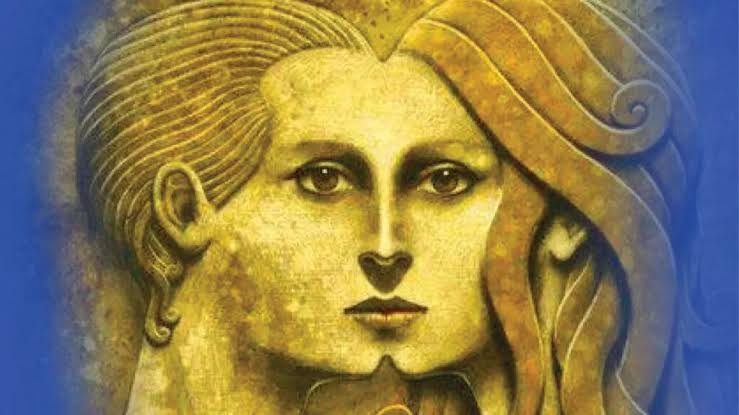
“Until you make the unconscious conscious, it will direct your life and you will call it fate.”
— Carl Jung
The Animus is one of Carl Jung's most nuanced and frequently misunderstood archetypal ideas. In Jung's original psychology, the animus described the unconscious masculine dimension within a woman's psyche, complementing the anima as the unconscious feminine dimension within a man's. While this reflected the language and assumptions of Jung's time, many contemporary Jungian thinkers understand the animus more symbolically—as an archetype representing qualities of discernment, logos, direction, agency and inner authority that can emerge in anyone, regardless of gender.
If the anima often appears as the psyche's invitation into relationship and imagination, the animus asks different questions.
What do you stand for?
What truth are you prepared to live?
What kind of life requires your participation?
The animus is not merely about strength or decisiveness. At its healthiest, it represents our capacity to think independently, speak authentically and orient ourselves toward meaningful action. It is the inner principle that helps us move from possibility into commitment.
Logos and the Search for Truth
Jung frequently associated the animus with logos—not simply logic in the narrow sense, but the human capacity for reasoned understanding, discrimination and truthful speech. In many ancient philosophical traditions, logos referred to the underlying order of reality itself. The Stoics understood it as the rational principle woven through the cosmos. Early Christian theology used the term to describe divine creative intelligence. Jung borrowed this symbolic richness rather than reducing the animus to intellect alone.
The healthy animus therefore does not merely collect information. It seeks orientation. It helps us distinguish between opinion and conviction, reaction and response, certainty and wisdom. This becomes increasingly important in a culture saturated with information yet often uncertain about meaning.
John Vervaeke describes one aspect of our contemporary meaning crisis as a loss of the capacities that help us recognise what truly matters. In many respects, the mature animus represents precisely this faculty of wise discernment.
The Animus in Myth
Across mythology, the animus often appears not as a warrior but as a guide toward truth. Odysseus survives not through physical strength but through intelligence, restraint and practical wisdom. King Solomon becomes an enduring symbol of judgement. The Egyptian god Thoth records knowledge and mediates between worlds. In Arthurian legend, the sword Excalibur is more than a weapon. It symbolises rightful authority—power that must be united with responsibility.
These stories remind us that genuine authority does not arise from domination but from alignment with something greater than personal ambition.
Joseph Campbell observed:
“The privilege of a lifetime is being who you are.”
The animus helps us discover that authenticity requires courage as much as self-awareness.
The Animus in Literature and Film
Great stories often portray the animus as the gradual development of inner authority rather than external success. In The Lord of the Rings Aragorn spends much of Tolkien's story resisting the very role he is called to inhabit. His authority grows through humility, service and sacrifice rather than self-assertion. He becomes king only after learning that leadership begins with responsibility. This echoes Viktor Frankl's observation:
“Freedom is only part of the story and half of the truth... I recommend that the Statue of Liberty on the East Coast be supplemented by a Statue of Responsibility on the West Coast.”
Healthy authority is always balanced by responsibility.
In The Matrix Neo's journey is not simply about acquiring extraordinary abilities. It is about learning to trust an inner knowing that cannot be supplied by external authority. The film repeatedly asks one of the animus' central questions:
How do we know what is true? It is the inhabitation of this question that frees the minds of those who inhabit the Matrix and a task to which Neo is called to.
The Animus and Psychological Development
Jung observed that many dreams contain figures who challenge, instruct or confront the dreamer. Teachers, judges, old men, monks, kings. Sometimes these figures appear encouraging and sometimes intimidating. Rather than interpreting them literally, Jung understood them as symbolic expressions of the psyche's attempt to cultivate greater consciousness. Marie-Louise von Franz suggested that dreams often compensate for attitudes that have become too one-sided. When we feel directionless, dreams may introduce images of orientation. When we rely excessively upon certainty, they may introduce ambiguity instead.
The animus therefore does not simply provide answers.
It deepens the questions.
The Shadow of the Animus
Like every archetype, the animus possesses both creative and destructive possibilities. When unconscious, its gifts of discernment can become rigid certainty. Conviction becomes dogmatism. Confidence becomes domination. Thought becomes ideology.
Jung warned that unconscious archetypal energies can "possess" the personality. Rather than thinking for ourselves, we become identified with opinions, identities or roles that no longer remain open to dialogue.
James Hollis writes:
“The quality of our lives is determined by the quality of the questions we are willing to ask ourselves.”
The mature animus is not recognised by having all the answers. It is recognised by remaining in living relationship with truth.
The Animus and Vocation (or the mythopoetic)
One of the animus' deepest concerns is vocation. Not career.
Calling.
Bill Plotkin distinguishes between the socially successful life and the soul-centred life. The former asks what the world expects of us. The latter asks what unique contribution our life is seeking to make. Many people encounter the animus most vividly during periods of transition: midlife, bereavement, career change, parenthood, retirement. Moments when external structures no longer provide sufficient orientation. The question quietly emerges:
What is now mine to do? To what/who am I responsible?
The Animus in Psychotherapy
Depth psychotherapy offers a space to encounter the animus not as an abstract theory but as a living psychological reality. Questions of purpose, conviction, identity and responsibility often emerge naturally through therapeutic conversation. Dreams, myths, recurring life patterns and symbolic images all become part of an exploration of what is seeking expression through the psyche. This work is rarely about adopting ready-made answers. It is about cultivating the capacity to listen more deeply—to yourself, to your dreams and to the unfolding narrative of your own life. Over time, many people discover that the authority they have been seeking outside themselves has quietly been developing within all along.
Further Reading
Related Pages
Exploring the Animus Through Psychotherapy
The animus is not an ideal to attain but an ongoing relationship with the parts of ourselves that seek truth, responsibility and meaningful direction. When these capacities remain unconscious, we may feel chronically uncertain, overly dependent on external approval, or driven by rigid beliefs that no longer serve us. When they begin to integrate, we often discover a quieter, more grounded form of confidence.
In my practice, I work from a depth psychotherapy perspective informed by Jungian psychology, dream analysis, mythology and existential philosophy. Together, we explore the symbolic patterns that shape your life—not to impose answers, but to cultivate a deeper relationship with your own inner authority. Through dreams, reflection and careful dialogue, therapy can become a place where conviction grows not from certainty, but from a more authentic encounter with yourself.
We need your consent to load the translations
We use a third-party service to translate the website content that may collect data about your activity. Please review the details in the privacy policy and accept the service to view the translations.