Ben Stopford
Depth Counselling & Psychotherapy
Ben Stopford
Depth Counselling & Psychotherapy
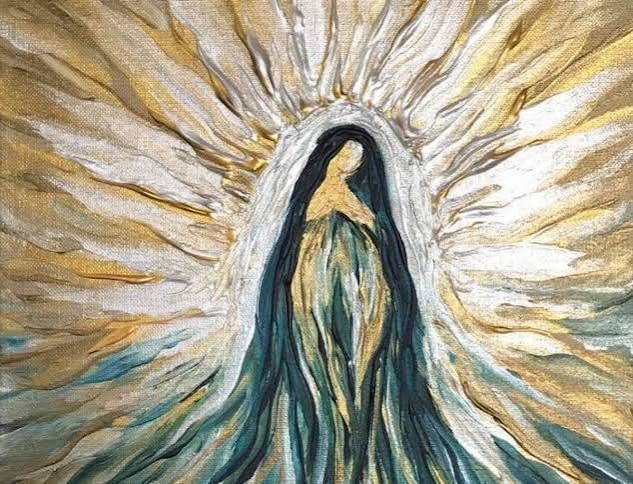
“The mother is the first world of the child.”
— Erich Neumann
What Is the Mother Archetype?
The Mother archetype is one of the deepest and most universal patterns within the human psyche. Long before we understand language, culture or identity, we experience life through relationship with those who care for us. Whether experienced as loving or absent, secure or unpredictable, these earliest experiences profoundly shape our expectations of ourselves, of others and of the world.
In Jungian thought, the Mother is far more than our biological mother. She is an archetypal image that represents nurture, protection, fertility, creativity, belonging and the capacity to sustain life. She is the fertile earth, the comforting home, the wise grandmother, the nourishing garden and the place of emotional refuge.
Yet, like every archetype, the Mother possesses both light and shadow.
She can nourish. She can also smother.
She can protect. She can prevent growth.
She gives life. She also asks whether we will ever leave home.
The Mother reminds us that psychological development always involves learning both how to receive care and how to eventually become responsible for our own lives; a dance that continues throughout life.
When people first hear the term Mother archetype, they often imagine it refers only to motherhood. Jung meant something much broader. The Mother represents every experience that helps life grow.
She appears wherever there is:
This is why people often describe certain places as mothering. An ancient woodland, a chair beside the fire, a monastery, the great ocean. The Mother is not only a person. She is the experience of being held.
The Mother in Myth
Across cultures, the Mother appears in countless forms. Demeter, grieving for Persephone, reminds us that love inevitably involves loss. Isis patiently restores the scattered body of Osiris, becoming a symbol of healing and renewal. Gaia embodies the living Earth itself. The Virgin Mary holds the energy of compassion, devotion and unconditional care. On Celtic lands, figures such as Ceridwen combine maternal nurture with profound transformation, tending the cauldron from which wisdom itself emerges. Such myths remind us that the Mother is not sentimental, but elemental. She governs birth and death, attachment and separation, abundance and sacrifice.
Some of the most memorable modern stories explore the many faces of the Mother archetype.
Molly Weasley of Harry Potter embodies fierce, ordinary love. She cooks, protects, comforts and cares. When those she loves are threatened, she becomes formidable. So the Mother teaches us that care is not weakness. Sometimes love requires extraordinary courage.
Jung and the Mother
Jung believed the Mother archetype was among the most fundamental structures of the collective unconscious. Our earliest experiences of care become the foundation from which later relationships develop. But he also insisted that the archetype extends far beyond personal biography. A person may carry a loving internal image of the Mother despite difficult childhood experiences. Equally, someone raised with excellent practical care may still feel emotionally unseen. The archetype therefore represents more than memory. It reflects an enduring psychological possibility.
The possibility that life can sustain us.
The Great Mother
The Jungian analyst Erich Neumann, one of Jung's most influential students, explored the Mother archetype in extraordinary depth. In The Great Mother, he describes the Mother as containing seemingly opposite qualities:
She creates. She destroys.
She protects. She devours.
She comforts. She demands sacrifice.
The image of the earth itself captures this paradox. Everything grows from it. Everything eventually returns to it. This is why myths so often portray the Mother as both beautiful and terrifying. She represents life in its fullness, its wholeness.
The Shadow
Every archetype contains a shadow. The healthy Mother nurtures growth. The shadow Mother fears it, so care becomes control, protection becomes overprotection, love becomes guilt and support becomes emotional dependence. The shadow may also appear through emotional absence, neglect, unpredictability, or the inability to provide secure attachment. Many adults continue carrying these early relational patterns long after childhood has ended. They may struggle to trust, to receive care, to rest, to believe they deserve kindness.
Depth psychotherapy often explores these patterns not to assign blame, but to understand how they continue shaping present experience.
The Mother and Dreams
Dreams frequently portray the Mother through symbolic rather than literal images.
You may dream of:
Sometimes these figures are comforting. Sometimes unsettling.
I often find that dreams involving maternal imagery emerge during periods when the psyche is exploring themes of belonging, creativity, dependency or renewal. The dream rarely asks:
"How was your mother?"
It asks something larger:
"What is nurturing your life now?"
The Mother is not only concerned with children. She is equally connected with creation itself. Artists, gardeners, teachers, therapists, writers, craftspeople. Anyone who patiently helps something grow participates in this archetype. James Hillman frequently argued that the soul requires tending rather than fixing. This is profoundly maternal work. Creativity often develops not through force but through patient cultivation. Just like a garden, or a relationship.
Yet healthy development eventually requires separation. The child must leave home. The student leaves the teacher. The apprentice becomes the craftsperson. This movement is psychologically essential. Joseph Campbell observed that every hero's journey begins with departure. The Mother provides the secure ground from which exploration becomes possible, for without leaving, there is no adventure. Without having first belonged, leaving becomes far more difficult. The Mother therefore gives both roots and, ultimately, wings.
In the fast, modern, rest-avoidant culture, the Mother archetype becomes increasingly important. She reminds us that human beings are not machines. We require nourishment, sleep, beauty, community, time in nature, quiet.
John O'Donohue wrote:
“When we cease to attend to the soul, it begins to starve.”
The Mother continually invites us back towards what genuinely sustains life.
The Mother in Psychotherapy
Many people arrive in therapy carrying invisible questions rooted in the Mother archetype.
Can I trust others?
Am I safe?
Do I deserve care?
Why do I always care for everyone else but neglect myself?
Why does receiving kindness feel uncomfortable?
These questions often cannot be answered through logic alone. They require embodied and psychological experience. Within a safe therapeutic relationship, new possibilities gradually become imaginable. Old assumptions soften. Compassion grows. The capacity to nurture oneself slowly develops alongside the ability to receive care from others. So depth psychotherapy does not attempt to recreate childhood. It offers an opportunity to relate differently to the patterns that childhood helped establish.
Further Reading
Related Pages
Exploring the Mother Through Psychotherapy
The Mother archetype lives within each of us, regardless of gender or whether we have children. It shapes how we experience care, belonging, creativity and emotional safety, often in ways that remain outside conscious awareness. When these patterns become rigid or wounded, they can quietly influence our relationships, our work, our capacity for rest and even the way we speak to ourselves.
In my practice, I work from a depth psychotherapy perspective informed by Jungian psychology, dream analysis, mythology and existential philosophy. Together we explore the symbolic patterns that continue to shape your life, attending to dreams, recurring relationships and the deeper questions that emerge through therapy. Rather than reducing the Mother to a childhood memory, this work invites a richer relationship with the archetypal forces that continue to influence how we nurture ourselves, connect with others and find our place in the world.
We need your consent to load the translations
We use a third-party service to translate the website content that may collect data about your activity. Please review the details in the privacy policy and accept the service to view the translations.