
Ben Stopford
Depth Counselling & Psychotherapy
Ben Stopford
Depth Counselling & Psychotherapy
“The privilege of a lifetime is to become who you truly are.”
— Carl Jung
What Is the Everyman Archetype?
The Everyman archetype is perhaps the least dramatic—and one of the most important—of all the archetypes. Unlike the Hero, who seeks adventure, or the King, who leads, or the Magician, who transforms, the Everyman seeks something profoundly human:
To belong.
To be accepted.
To contribute.
To share life with others.
The Everyman reminds us that a meaningful life is not always built through extraordinary achievements. More often, it emerges through friendship, responsibility, family, work, humour, neighbourliness and the quiet dignity of ordinary existence. In Jungian psychology, this archetype represents our need for connection with the human community. It reminds us that we are not isolated individuals striving for greatness. We are social beings whose psychological health depends upon participation, mutual recognition and shared meaning.
The Everyman asks a deceptively simple question:
Where do you truly belong?
Modern culture often celebrates exceptionalism. Stand out. Build a personal brand. Become exceptional. The Everyman offers a gentle challenge to this story. Perhaps a meaningful life is not measured by standing above others. Perhaps it is measured by standing alongside them.
The Everyman values:
This is not the archetype of mediocrity. It is the archetype of common humanity.
The Everyman in Myth
Unlike many archetypes, the Everyman rarely appears as a king or hero. Instead, this archetype often begins as the ordinary villager, the apprentice, the farmer or the traveller whose life reflects the experience of countless others. In many myths, these figures become the emotional centre of the story. Not because they possess extraordinary powers. But because they remind us what those powers are ultimately for. In Tolkien's legendarium, it is not the mighty warriors alone who save Middle-earth. It is gardeners. Friends. Ordinary people willing to carry shared burdens together. So the Everyman teaches that goodness often appears quietly.
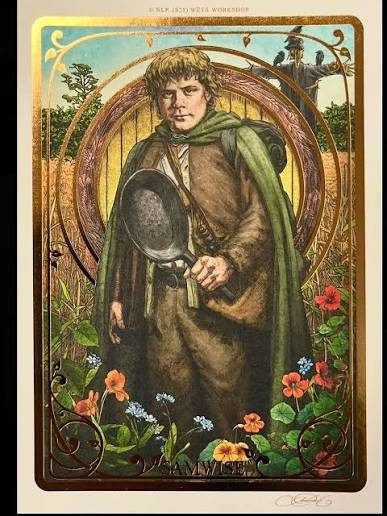
Some of the most beloved characters embody this archetype beautifully. Perhaps no modern character represents the Everyman better than Samwise Gamgee in The Lord of the Rings. He is neither king nor wizard. He seeks neither glory nor recognition. His strength lies in loyalty, humility, perseverance and love. J.R.R. Tolkien once remarked that Sam was, in many ways, the true hero of the story. His greatness lies precisely in his ordinariness.
Jung and the Everyman
Jung never identified a formal "Everyman archetype" in the way later writers such as Carol Pearson would. Yet his psychology consistently emphasises the importance of remaining grounded in ordinary human life. Jung warned against inflation—the tendency to identify with grandiosity, superiority or heroic fantasies. Individuation was never about becoming extraordinary. It was about becoming real. As Jung wrote:
“The shoe that fits one person pinches another; there is no recipe for living that suits all cases.”
The Everyman resists comparison and values authenticity over status. The psychologist Abraham Maslow recognised belonging as one of our fundamental human needs. Without it, even success can feel strangely empty. Contemporary research supports this insight. Strong social connection is consistently associated with:
The Everyman reminds us that flourishing rarely happens alone.
The Shadow of the Everyman
Like every archetype, the Everyman has a shadow. The desire to belong can become the fear of standing apart. Authenticity becomes conformity. Humility becomes self-erasure. Acceptance becomes people-pleasing. Many people discover they have spent years adapting themselves in order to fit expectations- keeping the peace, avoiding conflict, hiding parts of themselves, saying yes when they mean no. Over time, belonging purchased through self-abandonment begins to feel deeply lonely. The Everyman asks us to belong without disappearing.
The Everyman and Dreams
Dreams often portray this archetype through surprisingly ordinary settings.
You may dream of:
These dreams often invite reflection on identity and belonging. I frequently notice such dreams emerging during periods of transition, when someone is questioning where they belong or who they are becoming.
The dream may ask:
"Where do you feel most at home?"
Or perhaps:
"Where have you stopped allowing yourself to belong?"
Modern society offers unprecedented connection in some forms. paradoxically it also offers unprecedented loneliness. We can communicate with thousands of people while feeling unknown by almost everyone. The writer Robert Putnam, in Bowling Alone, argued that many traditional forms of community have steadily weakened over recent decades. John Vervaeke similarly describes a growing crisis of meaning and belonging. The Everyman becomes increasingly important in such a culture, reminding us that flourishing requires more than individual success. We need places where we are known, needed, welcomed.
The Courage to Be Ordinary
The philosopher Josef Pieper argued that modern life often forgets the importance of leisure—not simply relaxation, but contemplative participation in reality. Likewise, farmer philosopher Wendell Berry repeatedly reminds us that good lives are rooted in place, community and faithful attention to ordinary responsibilities. This wisdom feels increasingly radical. The Everyman quietly asks:
What if enoughness is not failure?
What if an ordinary life lived deeply is already extraordinary?
One of the great paradoxes of Jung's psychology is that becoming truly yourself often makes you feel more connected, not less. Individuation is not radical individualism. It is becoming sufficiently secure in yourself that genuine relationship becomes possible. The Everyman helps us avoid mistaking uniqueness for isolation. We become ourselves partly through recognising that we share far more with others than we often imagine.
The Everyman in Psychotherapy
Many people arrive in therapy believing something is fundamentally wrong with them. Often, they have simply become disconnected from ordinary humanity. They compare themselves relentlessly, feel left behind, iinadequate and alone. Depth psychotherapy creates a space where these experiences can be explored without judgement.
Together we may explore:
This work often reveals that healing is not found through becoming exceptional, but through becoming more genuinely ourselves—and more deeply connected with others.
Further Reading
Related Pages
Exploring the Everyman Through Psychotherapy
The Everyman archetype reminds us that our deepest psychological needs are often surprisingly ordinary: to belong, to be accepted, to contribute and to live in ways that feel authentic rather than performative. Yet in a culture that prizes achievement, visibility and constant comparison, these simple needs can become difficult to recognise. Many people find themselves outwardly successful while inwardly disconnected—from themselves, from others or from a sense of home.
In my practice, I work from a depth psychotherapy perspective informed by Jungian psychology, dream analysis, mythology and existential philosophy. Therapy offers a space to explore recurring relational patterns, questions of identity and the symbolic life of the psyche. Together we seek not an idealised version of yourself, but a more integrated one—someone able to belong without losing themselves, and to live an ordinary life with greater depth, meaning and presence.
We need your consent to load the translations
We use a third-party service to translate the website content that may collect data about your activity. Please review the details in the privacy policy and accept the service to view the translations.