
Ben Stopford
Depth Counselling & Psychotherapy
Ben Stopford
Depth Counselling & Psychotherapy
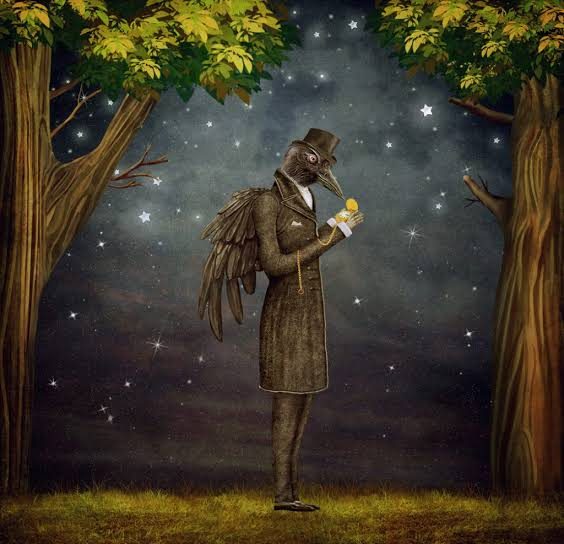
"The Magician does not seek power over the world. He seeks understanding of the forces that shape it."
What Is the Magician Archetype?
The Magician archetype represents the capacity to perceive beneath appearances. It is the archetype of insight, transformation, imagination and conscious awareness. Where the Warrior acts and the King governs, the Magician understands. He is the bridge between the visible and the invisible, translating mystery into meaning.
In Jungian psychology, the Magician is not just a figure from folklore. He symbolises an inner psychological function that enables us to reflect, interpret symbols, integrate unconscious material and participate consciously in our own development.
Every culture has recognised this figure in different forms: the wise elder, the shaman, the healer, the philosopher, the alchemist, the hermit, the monk, the scientist and the storyteller. Although their methods differ, they share a common task—to illuminate what lies hidden and help others navigate uncertainty.
When this archetype is alive within us, curiosity replaces certainty, and life becomes less about controlling events than understanding their deeper significance.
The Magician in Myth and Story
Throughout mythology, the Magician rarely occupies the centre of the story. Instead, they often appear as the guide who helps the hero see differently.
Merlin counsels King Arthur without seeking the throne himself. Odin sacrifices certainty in pursuit of wisdom, hanging upon Yggdrasil to gain the runes. Hermes moves freely between worlds, carrying messages between gods and mortals. Gandalf offers direction without demanding obedience. The alchemist patiently transforms base metals into symbolic gold; the gradual refinement of the human soul.
Joseph Campbell observed that myths repeatedly introduce figures who initiate the hero into a larger reality. Their purpose is not to remove struggle but to reveal its meaning.
He wrote:
"The privilege of a lifetime is being who you are."
The Magician helps us discover who that is—not through external achievement, but through inner attention.
Jung and the Magician
Jung did not describe a single "Magician archetype" in the way later writers sometimes have. Instead, the Magician emerges from several symbolic figures that populate his work: the Wise Old Man, the psychopomp, the alchemist, and the symbolic function that mediates between the conscious and unconscious mind.
These figures all represent the psyche's capacity for orientation and transformation. They remind us that healing rarely comes through force of will alone. It comes through a different relationship to ourselves.
Jung famously wrote:
"Who looks outside, dreams; who looks inside, awakens."
The Magician embodies this inward turn. Rather than solving life's mysteries, the Magician teaches us how to live alongside them with increasing depth, humility and imagination.
The Magician and the Process of Individuation
One of the Magician's central tasks is to support individuation—Jung's term for the lifelong process of becoming more psychologically whole.
Individuation is not self-improvement in the modern sense. It involves gradually integrating neglected aspects of ourselves: our Shadow, our vulnerabilities, our unrealised capacities, our dreams and our contradictions.
The Magician reminds us that transformation is usually subtle. Rather than dramatic conversion, it often arrives through sustained attention: noticing recurring dreams, recognising repeating relationship patterns, questioning inherited assumptions, and learning to listen to the symbolic language of the psyche.
Marie-Louise von Franz observed:
"The unconscious continually seeks to produce an impossible situation in order to force the individual to do the impossible."
What initially feels like crisis may therefore become the beginning of psychological development.
The Magician and Dreams
Dreams are the Magician's preferred language.
Jung believed dreams were spontaneous expressions of the unconscious, offering images that compensate for one-sided conscious attitudes. Unlike logical thought, dreams communicate symbolically. They reveal possibilities, conflicts and latent capacities through metaphor rather than explanation.
A Magician dream might include:
Such symbols rarely have fixed meanings. Their significance depends upon the dreamer's personal life and emotional context. The task is not to decode them mechanically but to enter into dialogue with them.
In dream analysis, I often find that dreams become a meeting place between conscious intention and unconscious wisdom. Over time, they can reveal patterns that remain hidden during waking life and invite a more integrated relationship with ourselves.
The Shadow of the Magician
Every archetype has a shadow. The healthy Magician seeks truth. The shadow Magician seeks control.
Knowledge becomes superiority. Insight becomes manipulation. Mystery becomes performance. Rather than remaining curious, the shadow Magician begins to believe they possess special certainty.
This pattern can appear in therapists, academics, spiritual teachers, political leaders or anyone whose identity becomes attached to being "the one who knows."
On a personal level, the shadow Magician may also retreat excessively into thought. Reflection replaces participation. Understanding becomes a defence against feeling.
James Hillman warned against reducing symbols to intellectual explanations. A symbol is not simply something to solve. It is something to remain in relationship with.
Psychological wisdom therefore requires humility as much as intelligence.
The Magician in Modern Life
The Magician appears in ordinary experience more often than we might imagine.
You may recognise this archetype if you find yourself:
In an age saturated with information, the Magician reminds us that knowledge alone is insufficient. What matters is discernment—the capacity to distinguish information from wisdom.
John Vervaeke describes this as relevance realisation: our ability to recognise what is truly significant amid overwhelming complexity. The Magician archetype resonates strongly with this idea, helping us cultivate a more meaningful way of perceiving reality rather than simply accumulating facts.
Why the Magician Matters
Modern culture often prizes productivity over contemplation and certainty over curiosity. Yet many of the difficulties that bring people to therapy—burnout, anxiety, disconnection, loss of meaning—cannot be solved through efficiency alone.
Bill Plotkin argues that many contemporary societies provide few genuine rites of passage into psychological adulthood. As a result, people may achieve external success while remaining uncertain about who they are or what deeply matters to them.
The Magician represents another possibility.
Instead of asking:
"How can I become more successful/happier?"
the Magician asks:
"What is life asking of me?"
This subtle shift often marks the beginning of a more meaningful life.
The Magician in Psychotherapy
Depth psychotherapy offers a space in which the Magician can emerge—not as a mystical figure, but as an inner capacity for reflection, imagination and transformation.
Together we may explore recurring dreams, symbolic images, unconscious patterns, life transitions, questions of meaning and purpose & archetypal themes within your personal story.
Rather than offering simple answers, this work aims to deepen your relationship with your own experience. The goal is not to become someone else, but to discover more fully who you already are.
Jung described this as becoming increasingly aligned with the Self—the deeper organising centre of the psyche.
Go Deeper
If you find yourself repeatedly drawn towards dreams, symbols, mythology or questions of meaning, it may be that the Magician archetype is becoming active in your life. Psychotherapy from a depth psychological perspective offers an opportunity to engage with these experiences thoughtfully, exploring how the unconscious communicates through images, relationships and recurring life patterns.
Whether you are navigating a period of transition, searching for greater purpose, or simply curious about the symbolic dimensions of your inner life, this work invites a deeper conversation with the psyche. It is often in learning to listen—rather than striving to control—that genuine transformation begins.
Further Reading
Related Pages
We need your consent to load the translations
We use a third-party service to translate the website content that may collect data about your activity. Please review the details in the privacy policy and accept the service to view the translations.