11. March 2026
What is Individuation?
In depth psychotherapy, individuation refers to the lifelong process of becoming who you truly are. It does not mean becoming “individualistic” in the modern sense, but rather gradually uncovering and integrating the deeper layers of the psyche — all that lies in the unconscious. The process moves a person from a narrow identification with the conscious personality toward a fuller relationship with what Jung called the Self — the totality of the psyche, both conscious and unconscious, integrated into wholeness and lived out in the real world.
Ego
To understand this journey, Jung distinguished between the ego and the Self. The ego is the centre of our everyday awareness: the voice that says “I,” the manager of our identity, roles, preferences, and decisions. It is distinct from persona (our masks), but directs them. Ego is necessary for navigating the world, but it is not the whole of who we are. When we believe it to be so, we act out from places of shadow by projecting onto the world around us. The Self, by contrast, represents the deeper organizing principle of the psyche. It includes the unconscious — dreams, instincts, forgotten memories, creative potentials, and symbolic intelligence. Individuation is the gradual reorientation of the ego so that it becomes aligned with this deeper centre.
The Mythopoetic
Bill Plotkin describes a similar movement in mythopoetic terms. In his work, the psyche unfolds like a living story. We are not merely solving problems or optimizing productivity; we are discovering our soul’s ecological niche — our unique way of belonging to the world. The mythopoetic imagination helps us listen to symbolic language such as dreams, images, and stories that arise spontaneously from the psyche. These are not random fragments as many would have us believe; they are guidance from the deeper Self. These are gifts from what many cultures call the ‘dream maker’.
Mandalas
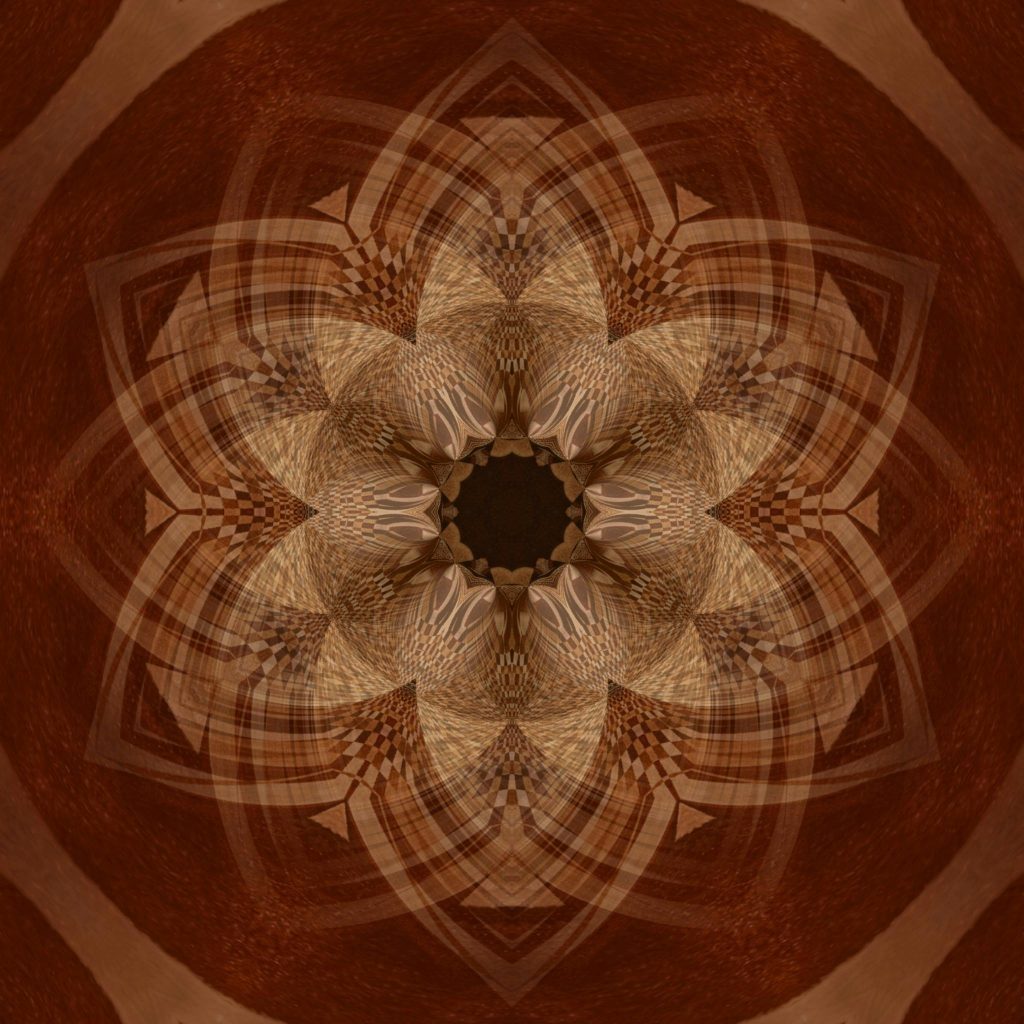
One of the most powerful symbols of individuation is the mandala — circular images with a central point that often appear in dreams, art, or spontaneous drawings during periods of psychological transformation. They symbolize the psyche’s movement toward wholeness: many elements arranged around a living centre. Other dream symbols can serve a similar function: journeys through forests or under water, encounters with wise elders, descending into caves, or discovering hidden rooms in a house. Such images speak the language of the unconscious.
Tension of Opposites
In this light, depression can sometimes be understood as a signal that the ego has become disconnected from the deeper Self. When life loses meaning, the psyche may be calling us inward — to question our assumptions, confront neglected parts of ourselves, and listen for the mythopoetic story trying to emerge. This can create tension, as the ego finds it devastatingly uncomfortable to inhabit anything that feels irrational or beyond-binary. If I am not masculine, I must be feminine, says the ego. Such polarities exist all around us: good and evil, light and dark, order and chaos, life and death, white and black. The Self has the capacity to meet the tension between such polarities, allowing us to become more nuanced, more authentic, more mature. But ego must allow this to occur, to which the psyche may respond in protective, potentially destructive ways.
Individuation is therefore not therapy; it is a path of meaning. By learning to interpret the symbols of our inner life, we begin to align our conscious choices with the deeper pattern of the Self. The result is not perfection, but a growing sense that one’s life participates in something purposeful, mysterious, and whole.